Ancient Fire & Fermentation in Osaka
Exploring the aromatic backstreets and ancestral kitchens where umami was first categorized.
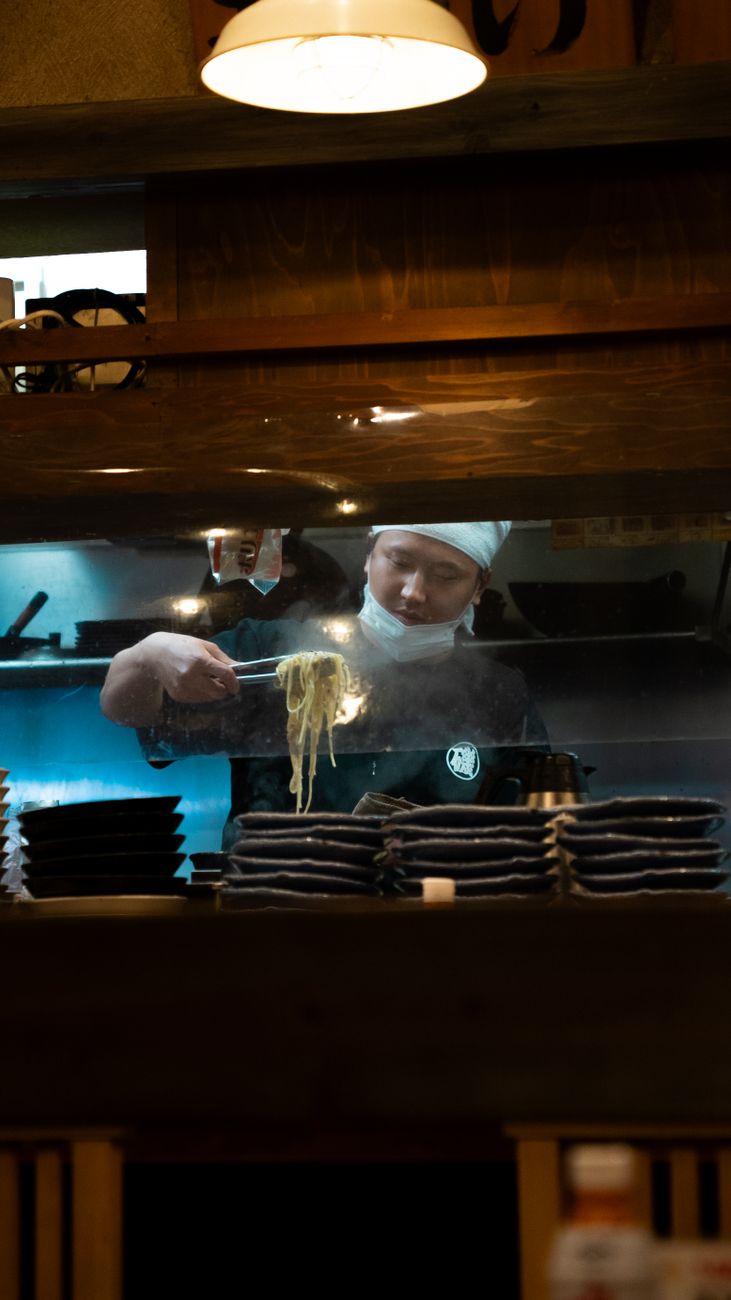
Behind the neon facades of Dotonbori lies an older, quieter world of timber-lined alleys. Here, small workshops have spent generations perfecting the art of drying skipjack tuna and fermenting soybeans inside cedar vats.
We met master broth maker Kenjiro Takahashi in his workshop, which has operated continuously since 1912. The ceiling timbers are stained dark by decades of oak smoke. Takahashi inspects each block of katsuobushi by tapping it with a wooden mallet; the sound must ring high and clear like flint.
"True culinary tradition does not belong to museums. It lives inside the hands of makers who repeat the same motion twenty thousand times."
The Geometry of Broth
Dashi appears simple—merely water, kombu kelp, and shaved bonito—yet it requires meticulous temperature control. If water exceeds 80 degrees Celsius before the kelp is extracted, harsh tannins leak into the liquor. This culinary discipline mirrors Japanese aesthetics: radical simplicity achieved through exacting craftsmanship.